
Beverly Hills Previous Residents Source Map
A previous-residents search starts with a stable address and then splits into owners, occupants, and property context. The Los Angeles County recorder supplies the title trail from 1850 or 1851 forward through a name and year index. City permits reach back to 1918, while local-history photographs, newspapers, directories, census schedules, and Sanborn sheets illuminate different eras. No one source supplies every household.
| Source | Years It Covers | Where Held | What It Shows |
|---|---|---|---|
| Recorder index and documents | 1850/1851-present | RR/CC Norwalk and copy route | Named transfers, instruments, legal descriptions |
| Building permits | 1918-present holdings; 1989+ web | Beverly Hills Community Development | Construction and applicant chronology |
| Certificates of occupancy | Late 1950s-present | Community Development request | Occupancy milestones and authorized use |
| Telephone books and city directories | 1934-63 digitized groups; known editions 1931-73 | LOC, library, licensed collections | Listed households, units, spouse, occupation |
| Federal census | Through 1950 open in 2026 | NARA and genealogy databases | Household members and relationships |
| Sanborn and historic surveys | August 1922; surveys 1985-86, 2004, 2006, 2023 | LOC and Beverly Hills Planning | Building footprint, history, names when documented |
Use the recorder for a legal owner, directories and census for a household, permits for a change, and surveys or Sanborn maps for place. A previous-residents conclusion is strongest when two of those layers meet at the same address and year.
Establish the Beverly Hills Address First
Before looking for previous residents, establish the parcel. Search the address or AIN in the county Assessor and CitySmart, record the situs, legal description, year built, permit dates, and any address aliases, then compare the property with the city map and historic surveys. A legal description or APN can survive a changed street label better than a typed address.
Keep situs, owner mailing address, permit applicant, and occupant separate. The public Assessor website suppresses owner identity, and an exemption flag does not prove current occupancy. Owner information is available through an Assessor district office or Property Data Sales. A permit applicant may be an architect or contractor. Each clue needs its own label.
Beverly Hills Previous Residents Deed Chain
The county recorder does not search by address or APN. Once the current owner is obtained through the Assessor counter or Property Data Sales, search that name as grantee in the approximate acquisition year. The grantor is the seller or transferring party. Search that grantor as an earlier grantee, keeping the legal description and recording sequence in view.
- Pull the current parcel, legal description, and construction clues from the Assessor and CitySmart.
- Obtain the current owner through the documented Assessor counter or data-sale route.
- Search that owner as grantee in the RR/CC name and recording-year index.
- Record the seller, instrument, date, document number, APN, and legal description.
- Search the seller as an earlier grantee and repeat until the archive limit or evidence gap.
- Grantor
- The party transferring an interest in the recorded instrument.
- Grantee
- The party receiving that interest.
- Chain of title
- The linked sequence of transfers used to trace ownership backward.
- Legal description
- Formal lot, block, tract, or parcel language that anchors older records.
Free viewing is by appointment at the full-service county location. The viewing page places 1850 to 1957 material on the lower level and 1958 to the present on the second floor. Copies can be ordered online, by mail, fax, or in person after the document is identified. County pages describe the coverage as 1850 or 1851 forward, so preserve the exact source wording.
The RR/CC index instructions explain the counter step used to trace Beverly Hills previous residents.
Beverly Hills Previous Residents Permit Dates
Building permits reach 1918 in Beverly Hills Community Development holdings, while CitySmart’s public construction catalog begins in 1989. Planning applications begin online in 2000. Certificates of occupancy reach the late 1950s, and geological or soils reports reach the 1950s. Electrical, mechanical, and plumbing files begin in 1987. Those series can bracket a change when the title chain names only an owner.
Use a permit number, address, APN, date range, or department in a focused city request. A permit applicant, owner of record, architect, contractor, and listed occupant can be different people. Plan sheets require written permission from both the property owner and the licensed professional who signed them under Health and Safety Code §19851.
The city’s permit-record route is a better first step than assuming an older file is absent because it is not in the web catalog.
The Beverly Hills permit-record page states the coverage split between older holdings and the online catalog.
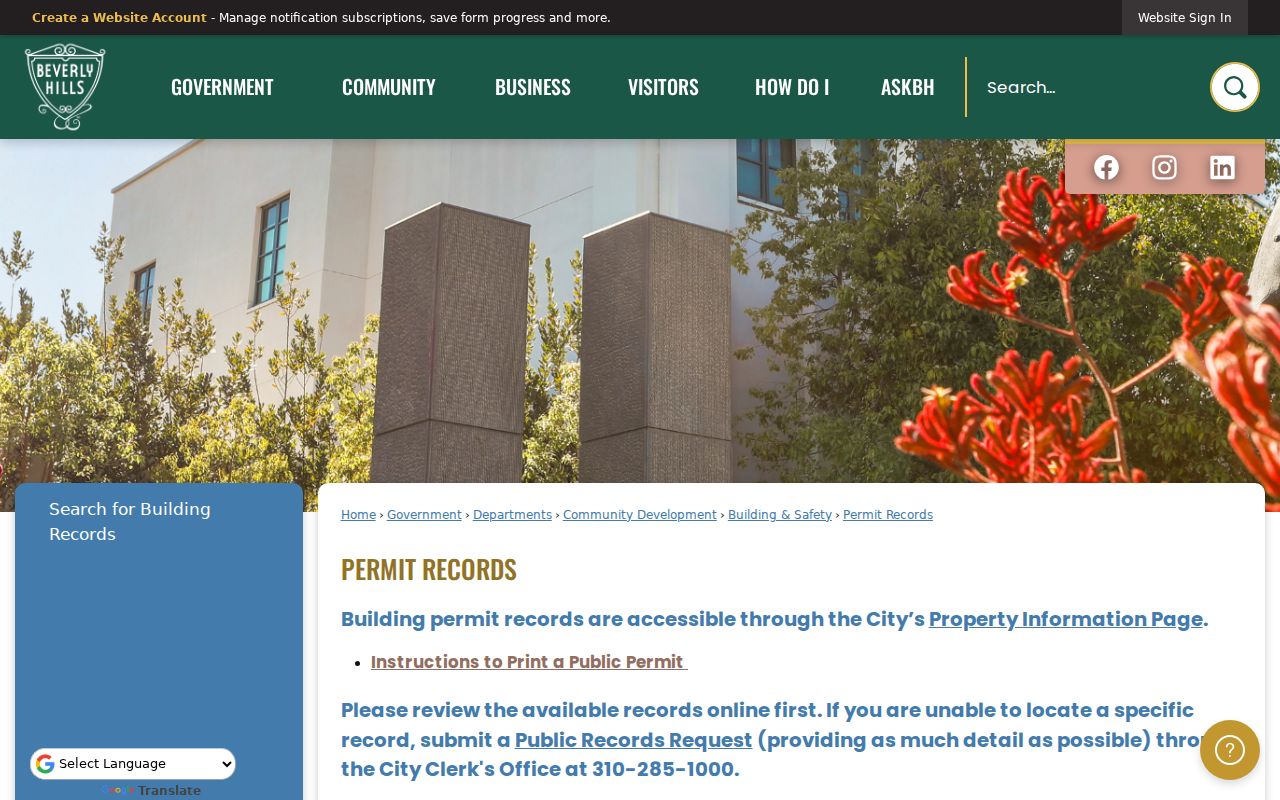
Permit chronology can show when a property changed even when an occupant name is missing.
Beverly Hills Previous Residents in Directories
City directories and telephone books supply the occupant layer beside the deed owner. Known Beverly Hills city-directory editions include 1931, 1938, 1955, 1960, 1964, and 1973. Library of Congress telephone-book groups cover 1934 through 1954, with single February editions for 1955, 1959, and 1963. The research does not establish an exact reverse-directory run or a complete annual sequence.
Use address order to find a unit, then expand the alphabetical listing for spouse, occupation, widow or divorced notation, and name variants. Compare adjacent known editions. A person can remain at an address while a directory skips the unit, or a new entry can be a namesake. Directory collections themselves are described in the Beverly Hills city directory resource.
The Beverly Hills Public Library local-history collection can search specific questions by appointment. Give staff the address, names, variants, tract or APN, and approximate dates.
The Beverly Hills library catalog supplies keyword, title, author, subject, and advanced search modes.
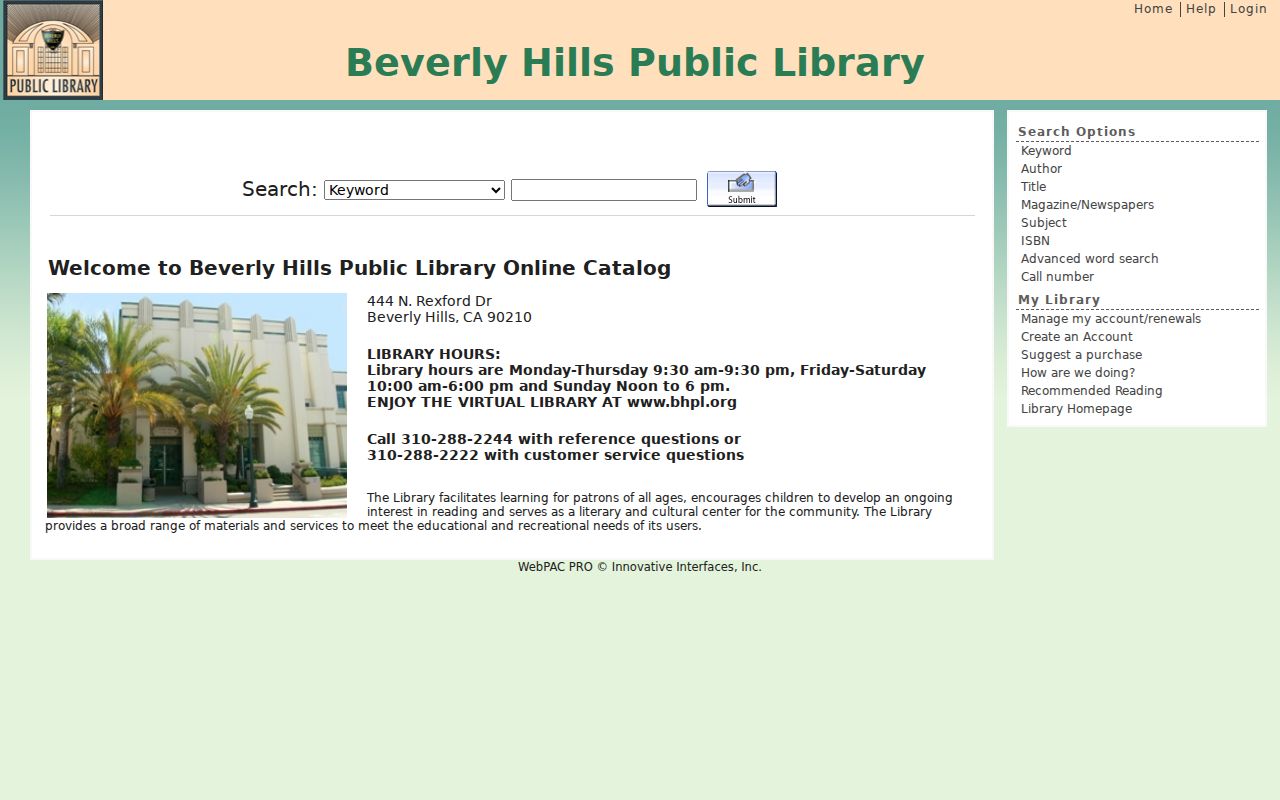
A catalog result can point to a book or collection, while an appointment request supplies the local-history context.
Beverly Hills Previous Residents: Vacant or Unlisted
A local historic-resource report for 157 South Crescent and 9361 to 9365 Charleville preserves a useful warning. The 1938 entry marks one unit “vacant,” while other years use “no listing.” The first is an explicit volume notation. The second says only that no entry appears in that edition.
Use the distinction when reconstructing past households. Check the next known edition, street order, unit number, spouse form, permits, census, and newspaper before calling a change. Silence in a city directory is not a finding about a person’s move, death, or absence.
The 1950 Census and Beverly Hills Households
The 1950 federal census is the latest open household schedule as of 2026 under the 72-year rule. Pair a directory year with the correct enumeration district, then compare household members, relationships, age, and address. The census can fill the gap between known directory editions, but a street label or district mismatch can place the search in the wrong block.
- Normalize the historic street name and confirm the parcel or cross-street.
- Find the address-order directory entry and copy every unit and listed household.
- Locate the matching census district and compare household relationships.
- Use permits, deeds, newspapers, or probate to test a name change or departure.
Disappearing from a directory is not enough to establish death or relocation. Census evidence is one dated layer in the previous-residents trail.
Beverly Hills Previous Residents and Sanborn
The verified August 1922 Beverly Hills Sanborn set has fourteen sheets. It shows footprints, construction materials, uses, street names and numbers, and fire infrastructure. It does not name residents. That makes it useful for matching a historic building or unit pattern to a modern parcel before a directory or deed entry is assigned.
Compare the sheet with the legal description, surveyor field books from the 1920s through the 1960s, city historic surveys, and present-day GIS. No other Beverly Hills Sanborn year was verified. Keep the map as place evidence, not a household source.
The Library of Congress Sanborn item supplies the verified map set. The Beverly Hills Public Library local-history page supplies the appointment route for related photographs and field books.
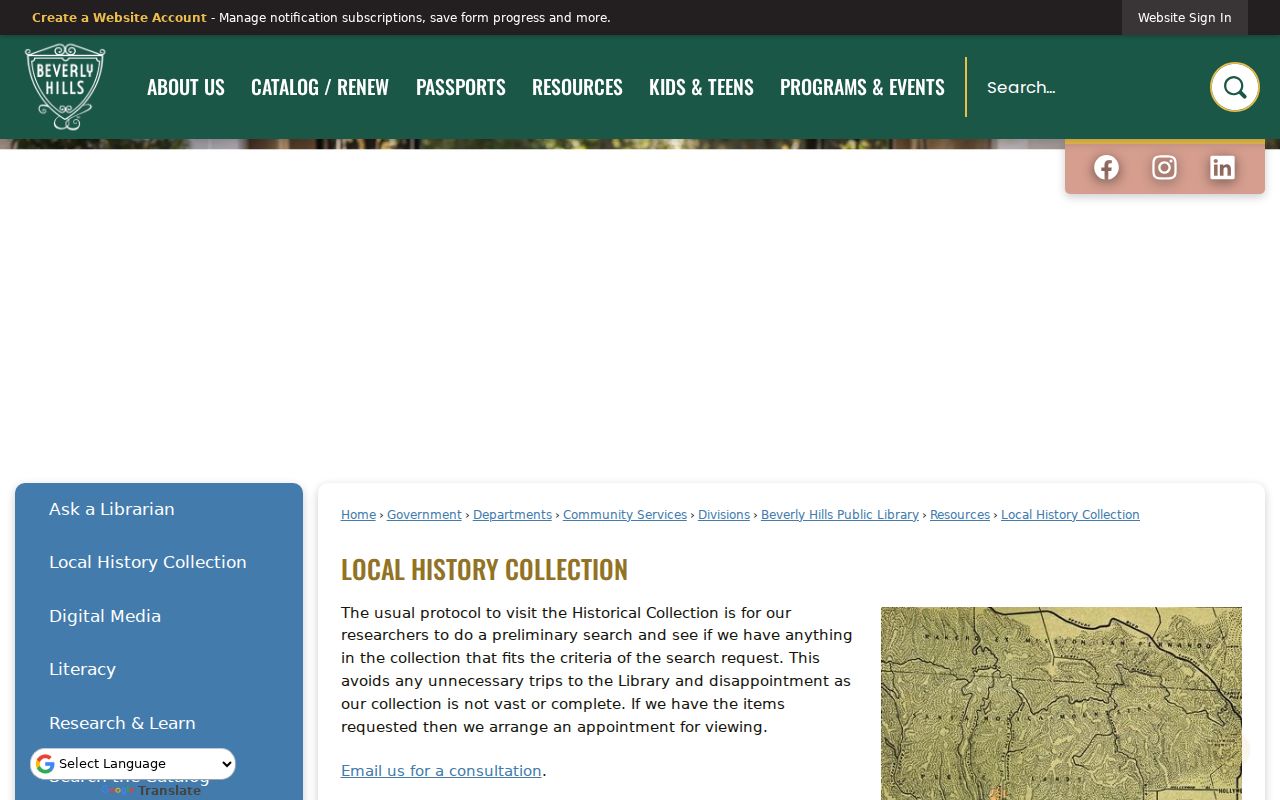
Library and archive context helps connect the map to a name without claiming that the map itself lists residents.
Close the Beverly Hills Previous Residents Trail
Owners are only one half of past-household research. Address-order directories and census schedules can show people who lived at a parcel, while deeds show legal transfers. Local newspapers from 1923 forward, photographs from 1885 forward, probate petitions, obituaries, cemetery records, and historic surveys can explain a later departure or death. Each source has its own coverage and privacy rules.
For an heir question, probate petitions and notices can identify relatives, fiduciaries, counsel, and mailing addresses, while inventories or medical detail may be restricted. For a house-history question, stop when the address link becomes uncertain. A family-history record is not permission to pursue a living person.
Lawful use. Beverly Hills previous-residents research is for house history, family history, and personal curiosity. Do not use a past address to watch, track, threaten, or harass a living person.
Note: a careful unresolved trail is better than turning an owner, permit applicant, and former occupant into one unsupported identity.
An audit note should say whether the index was checked at Norwalk or whether the chain came from a copy request. The public recorder page does not provide a deed-image index, and the Norwalk alphabetical grantor and grantee index is split: 1850/51 through 1957 on the lower level, and 1958 forward on the second floor. Viewing is free by appointment, while copies are paid. Copy the recording date, instrument number, and legal description before moving to a new source.
That detail makes a Beverly Hills house-history result reproducible and marks the point where a previous-residents search ended. If the address link fails, preserve the uncertainty, note the alternate parcel or street label, and return to the map or directory rather than assigning a person by resemblance alone.